

Top 10 Helpful & Actionable Ways to Improve Fleet Efficiency in 2026
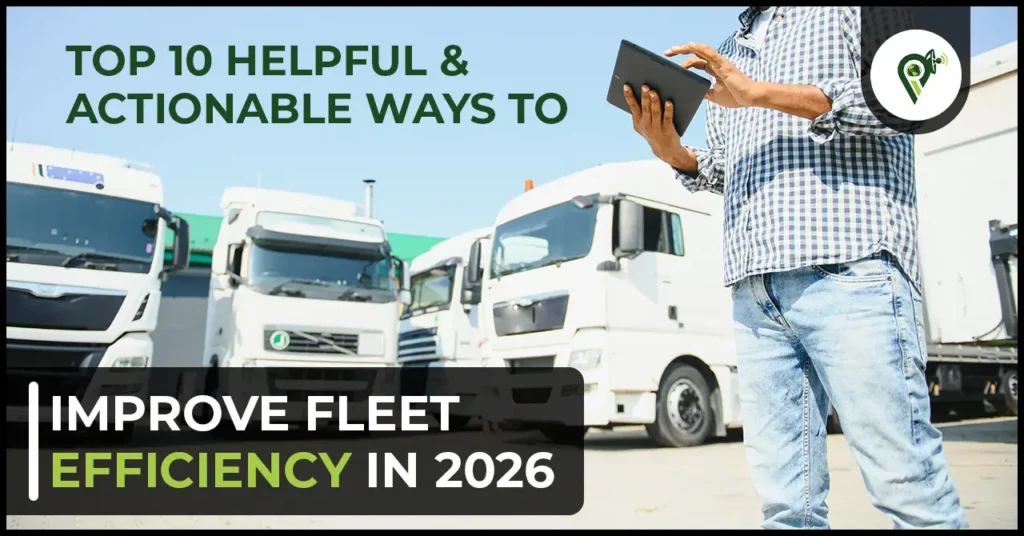
Do you work in fleet management and need to maximize fleet efficiency? It is recommended to use GPS tracking & telematics, monitor fuel consumption, schedule maintenance, optimise routing, set geofences, analyse reports, track KPIs, and monitor driver behavior. Implementing these measures will help reduce downtime, improve profitability, and enhance overall fleet operations.Fleet managers face several challenges in their day-to-day operations and seek a reliable, effective way to address them.
Therefore, most businesses are moving toward advanced solutions to reduce downtime, improve vehicle health, ensure on-time deliveries, and lower operational costs. Without these advancements, fleet vehicles are more likely to face risks. Additionally, rising fuel prices are putting greater pressure on fleet managers to enhance overall fleet efficiency while keeping costs in check. Therefore, we are here to help you implement measures that increase profitability and productivity.
10 Ways To Enhance Fleet Efficiency
Implement these measures across your fleet to enhance overall vehicle operational efficiency.
1. Use GPS Tracking & IoT Sensors
The military has used GPS trackers for decades. It has helped them navigate, and over time, it has evolved significantly. It is now part of everyone’s life. Individuals and companies widely use it to monitor, track, and manage vehicles from their offices. With an in-built GPS tracker, companies can track the movement, location, and status of their vehicles. GPS technology and IoT sensors have eliminated guesswork and the risk of errors. Now, vehicles are more secure and within your eyes wherever they go.
2. Integrate Telematics
When combined, GPS and telematics deliver significant results. The telematics system allows you to monitor key fleet metrics and provides multiple alerts. It can track the driver behavior such as speeding, idling, hard braking and so on. You can monitor fuel usage, routes taken, vehicle performance, and more. Integrating telematics keeps you up to date on all aspects and helps identify areas for improvement to support better decisions.
3. Monitor Fuel Usage
Fuel is a significant expense for transport companies. If fuel costs are managed effectively, they can be reduced by half. Most of the time, drivers take unplanned, long routes. Taking these routes wastes time and money. Therefore, fuel sensors keep you updated on fuel usage per mile and refilling, reducing waste. Use fuel sensors to monitor fuel consumption per vehicle per mile, recommend more efficient routes, and reduce unnecessary expenses.
4. Scheduled Maintenance
Some advanced software solutions include AI capabilities. These advanced software gives predictive maintenance reminders. These reminders are to update you on the fixing of the damaged parts. Timely maintenance means the vehicle is in good condition, which ultimately saves extra expenses on costly repairs. Your vehicle’s lifespan also increases with timely maintenance. It ultimately saves you money and ensures the vehicle is in good health.
5. Optimized Route Planning
Route planning is critical to enhancing fleet performance. It is advisable to use advanced software to optimize routes. The result of improved routes is reduced fuel usage, punctual delivery and increased customer satisfaction. The cost reduction in route planning is not limited to this; it also supports profitable operations. More fleet operations can be completed in less time, and it also enhances your brand reputation.
6. Monitor Using Mobile App
When it comes to advanced technologies, most companies also offer mobile apps that let you install your tracker. These mobile apps give advanced features and functionalities. You can monitor your vehicles’ live locations, identify idle vehicles, and make informed decisions. You can monitor all aspects from the comfort of your space. It allows you to provide first aid during an emergency and minimise the risk of uncharacteristic behavior. With these apps, you can remotely lock your vehicles and receive multiple alerts. It keeps you informed of every inconvenience and helps enhance operational excellence.
7. Set Geozones
Setting the geozone is another essential factor to consider. Advanced software allows you to set geoboundaries to enhance safety and better control. Setting up these zones will significantly improve your fleet’s operational efficiency. Whenever a vehicle deviates from the designated route, the system will automatically send an instant alert through the mobile app. It will help you make informed decisions and enable immediate action to prevent any unforeseen issues with your vehicle. It ultimately enhances the fleet performance and efficiency.
8. Monitor Driver Behavior
Driver behavior is another important aspect that should not be ignored. Most of the vehicle’s drivers are habitual of risky driving. It includes overspeeding, harsh braking, stop sign violations, and excessive idling. These habits affect overall fleet performance and increase the chances of risks. Monitoring driving performance supports accountability and improves overall fleet operations. It is advisable to monitor driver behavior, hold them accountable for their actions, and promote positive driving by offering performance-based incentives. It will help in improving their behavior and overall fleet performance.
9. Analyze Report
Analyze daily reports across key aspects of fleet performance. These reports must include KPIs such as speeding, fuel usage, distance travelled, and more. Some softwares also provides automated reports on various aspects based on your selected timeframe. You can access daily, weekly, monthly, and annual reports for various performance indicators. Analyzing these aspects helps you monitor which areas need improvement. It ultimately enhances your vehicle uptime and fleet efficiency.
10. Track KPIs
Effectively track fleet KPIs to drive actionable improvements. Some fleet management softwares provides a centralized dashboard for trend analysis. It ultimately enhances the fleet performance and overall profitability. Some recommended KPIs that should be tracked include:
- Cost Per Mile
- Vehicle Downtime
- Fuel Economy
- Driver Behavior
- Maintenance
To implement it, you’ll need telematics and fleet management solutions with a centralized dashboard. It enables you to monitor all fleet activities, improve operational efficiency, and minimise vehicle downtime.
Summing Up!
Making the fleet efficient in 2026 is no longer about operating vehicles manually; it’s about making more intelligent, data-driven decisions. With GPS tracking, telematics, fuel management, predictive maintenance, route optimization, and driver performance insights, fleet managers will have complete visibility and control over their operations. Such practical measures not only minimize fuel consumption, downtime, and maintenance costs but also enhance delivery performance, driver responsibility, and profitability. These are the best practices you can implement today to create a safer, more efficient, and future-ready fleet that delivers consistent results.
8 Tips To Measure Fleet Performance For Improving Business Profitability
8 Tips To Measure Fleet Performance For Improving Business Profitability The top 8 effective tips to measure vehicle performance include monitoring KPIs, total cost of

Top 5 Smart Ways For Salik Recharge In Dubai
Top 5 Smart Ways For Salik Recharge In Dubai 2026 Salik is an essential RTA initiative that aims to reduce traffic congestion and smooth traffic
Top 7 Reasons To Use A GPS Tracker For Your Vehicles
Top 7 Reasons To Use A GPS Tracker For Your Vehicles A GPS tracker is a growing need for individuals, businesses, fleet companies, shipments, and